


Dutch Oven Bread Baking for Beginners
20-11-2025
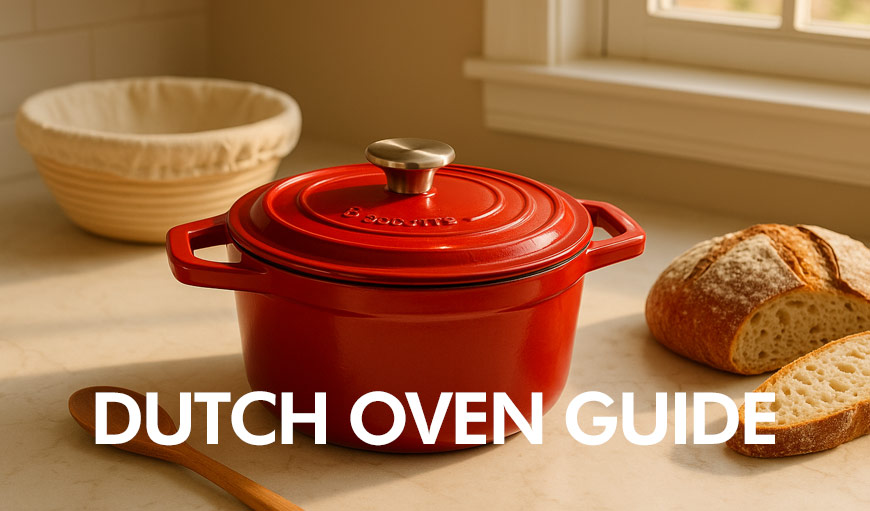
A Dutch Oven is one of the most reliable pieces of cookware for home bakers who want to create bread with steady heat, balanced rise, and a crust that forms naturally without complicated setups. Many beginners feel uncertain about how to create the right environment for successful baking because home ovens do not always offer the consistency needed for professional style results. This guide focuses on how this cookware solves that challenge by offering a controlled and predictable space where dough can bake evenly and develop flavour more effectively.
This blog has been designed to give beginners a complete understanding of why this pot has become a favourite for bread makers and how it supports the entire baking process. You will learn what this cookware is made of, how its construction influences heat distribution, and why its enclosed design allows dough to perform better during the early stages of baking. We will also highlight the benefits it provides for beginners who want reliable outcomes without relying on advanced appliances or steam producing equipment.
As you move through this guide, you will find clear sections that explain how the pot works, the advantages it brings to your kitchen, and the specific features that make the twenty centimetre model suitable for small and medium loaves. You will also explore step by step instructions for using the pot in a simple and beginner friendly way. These steps help you understand how to prepare the pot, how to position your dough, and how to manage the baking sequence with confidence.
In addition to methods, this guide includes tips for better results, important care instructions, a comparison of different materials, and answers to questions that beginners often ask. By the end, you will have a complete understanding of how this cookware elevates home bread baking and why it is considered a valuable and long lasting addition to any kitchen.
What is a Dutch Oven?
A Dutch Oven is a heavy and durable cooking pot made to retain heat steadily and distribute it evenly across its entire surface, which makes it an essential piece of cookware for home bakers looking to create balanced and consistent bread. Its design features thick walls, a solid base, and a tightly fitted lid that works together to form a compact chamber capable of holding heat and moisture for long periods. This chamber behaves like a controlled mini oven inside the main oven and provides the stable environment that bread dough needs during the critical early stages of baking when structure, lift, and surface texture begin to develop.
The pot is typically crafted from cast iron and often coated with enamel, which adds convenience because the surface becomes easier to clean and does not require seasoning. Cast iron has the ability to absorb heat slowly and release it gradually, and this steady release is important because it prevents sudden temperature changes that can interrupt dough expansion. The enclosed lid creates a naturally humid atmosphere around the dough, allowing the surface to stay flexible until enough internal lift has formed. This approach mirrors the environment used in professional bakery settings where steam plays a crucial role in crust formation.
Another valuable characteristic of this pot is its versatility. It can be used for bread, simmering, roasting, and slow cooking, which allows home bakers to integrate it into everyday meal preparation. Its rounded interior supports the shape of common artisan loaves, and its weight keeps the temperature stable even when the oven door is opened or when cooler dough is placed inside. These features collectively ensure that the baking process remains predictable and consistent, giving beginners the confidence to explore new recipes and techniques while relying on cookware that delivers dependable performance.
Modern enamel coated versions have made this style of pot more accessible because they combine the traditional advantages of cast iron with easier handling and maintenance. They fit well inside household ovens and complement a wide range of bread styles from basic country loaves to slow fermented preparations. For home bakers who want to create bread with clarity, consistency, and flavour, this cookware offers a strong foundation that supports steady learning and long term use.
Why Use a Dutch Oven for Bread Baking?
Creating dependable bread at home often requires controlled heat, steady moisture, and a protected baking space. These conditions allow dough to rise gradually and form a balanced crust, yet they are not always easy to achieve in a standard oven. A Dutch Oven offers a compact environment where heat remains consistent and moisture stays inside long enough to support natural expansion. This makes the cookware especially valuable for beginners who want reliable performance without additional tools or complicated techniques. The pot works like a small baking chamber that encourages the dough to rise fully before the crust begins to set, making each bake feel more predictable and satisfying.
Key Reasons Bakers Prefer This Cookware
- The enclosed design creates the ideal atmosphere needed for a Dutch oven for bread because the moisture released from the dough stays inside and supports early rise.
- The thick and heavy structure absorbs heat evenly and releases it gradually which prevents sudden temperature changes that can affect texture.
- The pot supports proper oven spring by helping the dough expand naturally before the crust forms.
- The controlled environment reduces the chances of uneven browning or pale spots that often happen in open baking.
- Heat distribution remains stable even when the oven door is opened which gives beginners more confidence when handling dough.
- The rounded interior supports the natural shape of artisan style loaves and allows enough room for expansion.
- The pot is versatile enough to be used for multiple baking techniques, making it a long term addition to the kitchen.
Using this cookware creates a dependable foundation for home bakers who want to explore different bread styles with clarity and confidence. Its ability to hold heat, protect the dough, and maintain a stable atmosphere helps beginners achieve more consistent and attractive results. Over time, this reliability encourages experimentation with new recipes and supports steady skill growth for anyone learning to bake bread at home.
Benefits of Baking Bread in a Dutch Oven
Home bakers often look for ways to improve consistency, texture, and flavour in their bread, and a Dutch Oven provides a collection of advantages that make this process more manageable. Its design simplifies the full baking cycle, beginning from the moment dough enters the pot to the moment the crust develops. The reliable heat circulation and moisture rich atmosphere created inside the cookware help beginners achieve outcomes that feel both professional and repeatable. These benefits are especially valuable for those who are exploring new recipes or learning the fundamentals of artisan style baking.
Important Benefits of This Cookware
- The enclosed structure of the pot supports better oven spring which helps the dough rise steadily before the crust becomes firm.
- Consistent heat circulation improves crust development and helps the loaf gain a balanced golden colour across its surface.
- A Dutch oven for bread gives beginners the advantage of a stable environment that reduces the impact of uneven heat inside a regular oven.
- Moisture remains inside the pot for a longer time which encourages a glossy and crisp crust that forms gradually and evenly.
- The pot supports a wide range of bread styles including country loaves, no knead recipes, and slow fermented preparations.
- Its material composition holds heat for a long duration which improves uniform cooking throughout the loaf.
- The pot is easy to handle and maintain which makes it suitable for weekly baking routines.
- The rounded interior provides enough room for expansion and helps the dough maintain structure during the early bake stage.
- Beginners can enjoy predictable outcomes because the cookware reduces common issues such as collapsing loaves or pale crusts.
These benefits allow the cookware to serve as an essential tool for anyone who wants a dependable and supportive baking companion. By offering consistent heat, contained moisture, and adaptable performance across many recipes, the Dutch Oven helps create bread that feels flavourful, visually appealing, and satisfying to bake. This reliability encourages bakers to continue improving their skills while enjoying the creative experience of making fresh bread at home.
Key Specifications of the 20 cms Classic Enameled Dutch Oven from Bakerykart
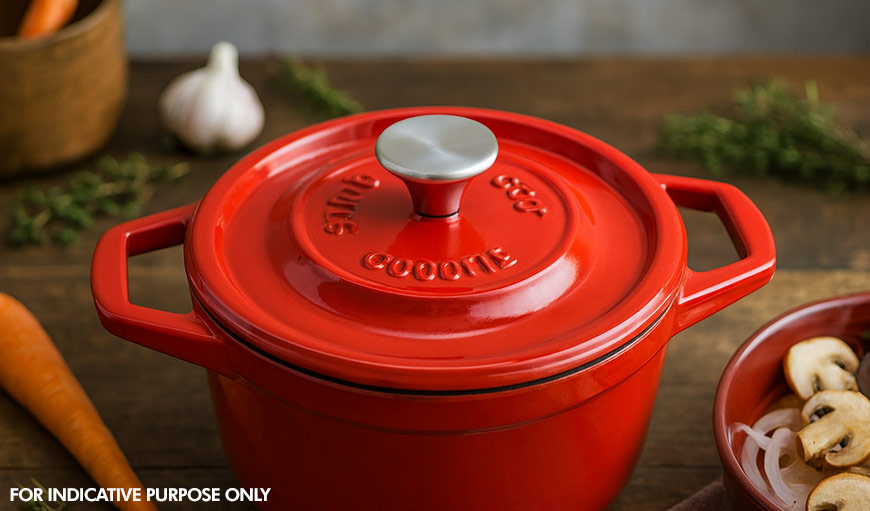
When bakers select a Dutch Oven, the specific design and construction details make a significant difference in performance, comfort, and baking quality. The 20 cms Classic Enameled Dutch Oven available on Bakerykart has been designed to support home bakers who want dependable results with artisan loaves. Its size, weight, and material composition make it ideal for small to medium loaves, especially for beginners learning sourdough and everyday country bread. This section highlights the essential features that influence heat retention, handling, and baking performance so that bakers understand exactly what they are working with.
Key Specifications
- The pot is crafted from cast iron which offers exceptional heat retention that supports consistent baking across the entire loaf.
- The enamel coating provides a smooth, non reactive surface that does not require seasoning and is simple to clean after baking sessions.
- The pot supports bread baking because it maintains stable heat, allowing both sourdough and yeasted doughs to rise and colour evenly.
- The Dutch Oven is oven safe which means it can be used confidently for high temperature bread baking without concern about damage.
- The pot is suitable for cooktops and induction stoves which adds versatility in meal preparation beyond bread.
- The product has a net weight of 3.4 kilograms which contributes to stable heat management inside the baking environment.
- The gross weight of 3.8 kilograms reflects its sturdy construction and professional feel.
- The pot has a total volume capacity of 2.5 litres which supports dough expansion during baking.
- The bakeware measures 20 cms in length and 20 cms in width which makes it suitable for round loaves baked in standard proofing baskets.
- The height of 14.2 cms offers generous space for oven spring which helps loaves rise without restriction.
- The pot is made in China under strict quality standards that ensure durability and long term performance for daily use in baking.
These specifications make the 20 cms Classic Enameled Dutch Oven a practical and reliable choice for beginners who want consistent results without relying on commercial equipment. The combination of cast iron strength, enamel convenience, and compact size creates a supportive environment for bread baking. With the right dough preparation and scoring technique, bakers can expect impressive rise, balanced colour, and flavourful crusts. This pot also transitions seamlessly into regular cooking, making it a versatile addition to any kitchen that values performance and efficiency.
How to Bake Bread in a Dutch Oven?
Baking bread inside a Dutch Oven becomes a clear and manageable process when the steps are followed in a steady sequence. The enclosed heat and controlled moisture inside this cookware allow beginners to focus on essential techniques without worrying about unpredictable oven behaviour. By preparing dough thoughtfully and managing each stage with patience, the baking experience becomes more enjoyable and delivers results that feel consistently satisfying. This step by step guide outlines the core actions that help dough rise, expand, and transform into a loaf with balanced texture and flavour.
Step by Step Baking Process
- Begin by preheating the cookware inside the oven so it reaches a steady temperature that supports expansion during the early stage of baking.
- Prepare the dough according to your chosen recipe and allow it to complete its first rise with enough time for fermentation to develop strength and flavour.
- Shape the dough gently into a round form while creating surface tension that helps maintain structure during baking.
- Let the dough rest in a proofing basket until it reaches the appropriate fermentation level, keeping the surface lightly floured to prevent sticking.
- Use a sharp blade to score the top of the dough which guides the expansion pattern during the bake and improves the final appearance.
- Transfer the shaped dough into the hot pot with the help of parchment paper to ensure safe handling and preserve the structure of the loaf.
- Cover the cookware with its lid to retain moisture that supports the early rise typical of a Dutch oven for bread.
- Bake with the lid on during the first half of the baking cycle, then remove the lid to allow the crust to deepen in colour and texture.
- Once baked, lift the loaf carefully and place it on a wire rack so the interior can set properly and release excess steam.
Following this guided sequence helps beginners build confidence and familiarity with each stage of the bread baking process. The steady environment created inside the cookware works together with proper shaping, fermentation, and scoring to produce a loaf that feels balanced in texture and flavour. Over time, these steps become second nature, helping bakers explore new styles and achieve consistent results through a process that remains clear and rewarding.
Tips for Better Results with a Dutch Oven
Working with this cookware becomes more rewarding when small adjustments are made throughout the baking cycle. Bread responds strongly to the environment in which it bakes, and beginners can achieve noticeably better results by paying attention to heat, handling, hydration, and timing. These practical suggestions help enhance texture, flavour, and overall appearance while building confidence through consistent outcomes. Each tip supports beginners in creating loaves that feel balanced, well structured, and visually impressive, even when using simple recipes or minimal ingredients.
Helpful Tips for Consistent Baking Success
- Preheat the dutch oven thoroughly so it holds enough heat to support strong expansion during the beginning of the bake.
- Use parchment paper when transferring dough into the pot to maintain shape and prevent the loaf from sticking to the surface.
- Dust proofing baskets with rice flour to reduce the risk of sticking and to help the dough release cleanly before baking.
- Score the dough with a sharp blade to guide expansion and encourage an attractive final pattern on the crust.
- Place a small baking sheet on the rack below the pot if the bottom of the loaf becomes too dark during baking.
- Monitor hydration levels carefully because dough with higher hydration expands better but requires more handling confidence.
- Allow the loaf to cool completely on a wire rack so the crumb can set properly and maintain texture when sliced.
- Clean the enamel coating gently using soft sponges and warm water to preserve its smooth finish.
- Check the dough for proper proofing before baking because under proofed dough may tear while overproofed dough may collapse.
- Keep the lid slightly open during storage to prevent moisture buildup and protect the cookware from odour formation.
These tips allow beginners to refine their approach gradually and recognise how small improvements can influence the final loaf. With steady practice, the process becomes easier to understand and more enjoyable to repeat. The cookware offers the reliable heat and moisture needed for consistent results, and these tips help bakers make the most of its strengths while developing their own style and confidence in bread baking.
Caring for Your Classic Enameled Dutch Oven
Proper care ensures that your Dutch Oven performs consistently across years of baking and retains the qualities that make it such a reliable tool. The enamel coating, cast iron base, and tightly fitted lid all contribute to the pot’s stability and heat performance, so it is important to maintain each part with attention and care. Regular cleaning, correct storage, and thoughtful handling help preserve the pot’s surface and prevent issues that can affect baking results. These simple but effective habits make the cookware a long lasting companion for home bakers who enjoy preparing bread frequently.
Essential Care Guidelines
- Allow the cookware to cool naturally before washing since temperature shock can strain the enamel coating.
- Clean the pot using warm water and a soft sponge to avoid scratching or weakening the enamel surface.
- Soak the pot briefly if dough residue remains after baking as this loosens particles without the need for harsh cleaners.
- Dry the pot completely before storing to prevent moisture marks and protect the coating over time.
- Avoid stacking heavy cookware on top of the lid to prevent pressure that can damage the rim or enamel.
- Store the pot with the lid slightly open to maintain airflow and prevent moisture buildup inside the chamber.
- Use wooden or silicone utensils during cooking to preserve the enamel surface and avoid unwanted abrasion.
- Wipe the exterior regularly to maintain colour and visual appearance, especially after flour dust settles during baking.
- Keep the temperature moderate on stovetops since prolonged high heat can affect enamel integrity even though the pot is oven safe.
- Maintain gentle handling habits because consistent care supports the performance required for a Dutch oven for bread.
Caring for this cookware ensures that every loaf bakes inside a clean and controlled environment. When maintained properly, it continues to support even heat, steady moisture, and reliable baking conditions which all contribute to consistent results. These care practices help extend the life of the pot, making it a dependable part of your kitchen and a valuable tool for enjoyable and confident bread baking.
Comparison of This Cookware With Other Materials
Bread baking requires cookware that can hold heat steadily, manage moisture effectively, and offer a reliable environment for dough to expand before the crust forms. While the Dutch Oven continues to be a leading choice for home bakers, it is helpful to understand how it compares with other materials commonly used in home kitchens. Differences in heat behaviour, durability, maintenance requirements, and suitability for everyday baking become clearer when these materials are evaluated side by side. This comparison table highlights these points so readers can make informed decisions when selecting cookware for regular bread baking.
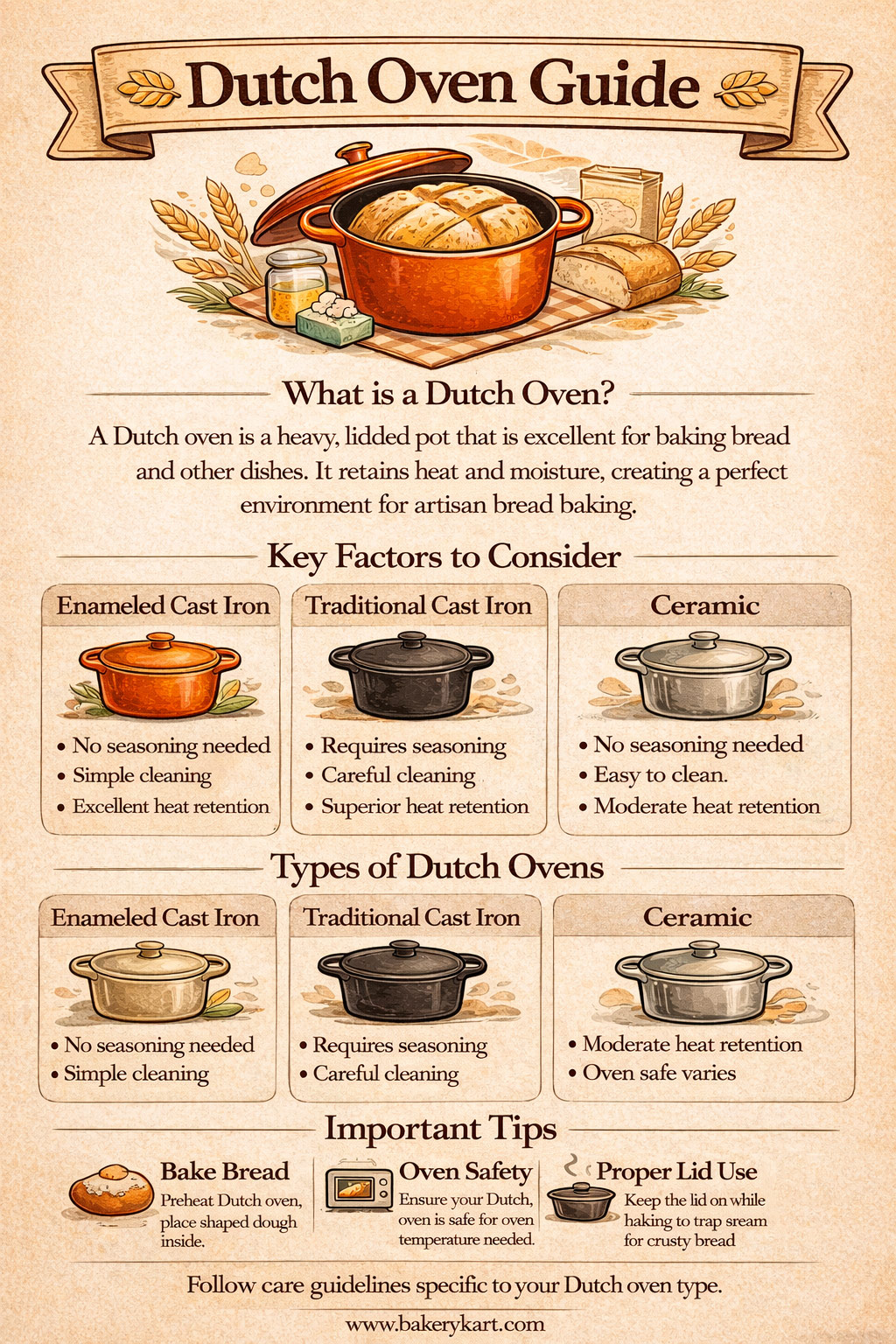
| Feature | Enameled Cast Iron | Traditional Cast Iron | Ceramic Cookware | Stainless Steel Cookware |
|---|---|---|---|---|
| Maintenance | Simple cleaning and no seasoning required | Needs seasoning and careful upkeep | Easy to clean but can stain | Very easy to clean but may develop hotspots |
| Heat Retention | Strong and steady heat retention | Very strong heat holding capacity | Moderate and less stable | Fast heating but weaker retention |
| Moisture Control | Excellent for contained baking | Excellent for contained baking | Limited steam trapping ability | Weak steam control for bread |
| Durability | Long lasting with proper care | Extremely long lasting | Moderate durability | High durability but not ideal for baking bread |
| Bread Baking Suitability | Highly suitable for many styles including Dutch oven for bread | Excellent for rustic styles and bold crusts | Suitable for light loaves only | Least suited for artisan bread baking |
| Handling Weight | Heavy but manageable for most users | Heavier and requires firm handling | Moderate weight | Lightest and easiest to move |
| Oven Safety | Fully oven safe | Fully oven safe | Oven safe but heat tolerance varies | Oven safe but less effective for crust formation |
Understanding these differences helps bakers make choices that align with their own preferences, baking routines, and kitchen setups. Enameled cast iron offers a balance of convenience and performance, making it a preferred option for both beginners and experienced bakers who want reliable heat and moisture control. Traditional cast iron remains a favourite for those who appreciate long lasting cookware and bold crust results, while ceramic and stainless steel options appeal to users who prioritise quick handling and simple maintenance. By choosing the cookware that best suits their needs, bakers can create bread with better structure, flavour, and consistency at home.
Common Mistakes Beginners Should Avoid
Beginners often face challenges when they first start baking bread in a Dutch Oven, especially when understanding how dough behaves inside a controlled and enclosed environment. Many of these challenges are related to timing, temperature, shaping, and handling. Recognising these common mistakes early allows bakers to adjust their approach and achieve better outcomes with less trial and error. With consistent practice and mindful observation, bread baking becomes more predictable and enjoyable.
- Baking with cookware that has not been fully preheated can reduce oven spring and lead to flat or dense loaves.
- Underproofed dough does not expand properly, while overproofed dough may deflate easily once inside the pot.
- Using too much flour during shaping weakens the dough surface and prevents the loaf from forming strong structure.
- Transferring dough into the pot without parchment paper can disturb the loaf’s shape and increase the risk of sticking.
- Scoring the dough with a dull blade prevents clean expansion and may create random cracks during baking.
- Placing cold dough into the pot without proper shaping support can cause uneven rise and a weaker crust.
- Baking at temperatures that are too low stops the crust from developing a balanced golden colour.
- Rushing to cut the bread before it cools leads to a gummy crumb because the interior has not fully set.
- Neglecting lid management affects moisture control and can prevent the environment needed for a proper Dutch oven for bread bake.
- Using low quality flour limits elasticity and can make dough collapse during early oven spring.
Avoiding these mistakes helps beginners develop a stronger understanding of dough behaviour while gaining confidence in their baking routine. Each adjustment supports better rise, improved texture, and more attractive crust formation. With experience, bakers learn to recognise early signs of overproofing, underproofing, or temperature mismanagement, leading to loaves that feel more consistent and rewarding to prepare with each bake.
FAQs on Dutch Oven
Many home cooks and bakers have questions when exploring the use of a Dutch Oven for the first time. This cookware serves multiple purposes in the kitchen and offers heat performance that differs from standard pots, which often leads to curiosity about safety, care, and best practices. Understanding these commonly asked questions helps beginners choose the right model, adopt good habits, and maintain the pot in a way that supports long term use. These answers address everyday concerns so users feel confident and fully informed as they incorporate this cookware into their routine.
Frequently Asked Questions
- Is enamel coated cast iron safe for high temperature baking
Yes, enamel coated cast iron is designed to handle high heat and remains stable during baking, roasting, and slow cooking. It should be used according to the manufacturer’s recommended temperature range. - Does the cookware require any seasoning before use
Enamel coated models do not require seasoning because the surface is already smooth and non reactive. Traditional cast iron versions may need seasoning as part of ongoing maintenance. - Can the pot be used on induction stoves
Yes, most enameled cast iron models are compatible with induction stovetops because cast iron supports magnetic heating. - Is it normal for the pot to feel very heavy
Yes, cast iron is naturally heavy and this weight contributes to heat retention. The stability it provides is one of the reasons it performs so well for baking and slow cooking. - Can metallic utensils be used inside this cookware
It is better to use wooden or silicone utensils to protect the enamel coating and maintain its smooth surface. - Why does the pot sometimes develop slight colour changes on the exterior
Minor discolouration can occur with regular use and exposure to high heat. This does not affect performance and can usually be managed with gentle cleaning. - Is this pot suitable for everyday cooking as well as bread baking
Yes, it is highly versatile. It can be used for soups, stews, braising, boiling, roasting, and many other cooking styles, in addition to its performance as a Dutch oven for bread. - Can the pot be washed with detergent
Yes, gentle dish soap is safe for enamel coated surfaces. Avoid abrasive cleaners to preserve the finish. - What is the ideal size for most home bakers
A twenty centimetre model works well for small and medium loaves, while larger loaves may require a larger size to accommodate expansion. - Can it be placed in the refrigerator for overnight storage
It is not recommended to refrigerate the pot because rapid temperature changes can affect the enamel surface. It is better to store dough separately.
These questions reflect the concerns most users have when working with this cookware for the first time. With proper care and mindful use, the pot remains a dependable and long lasting addition to the kitchen. Its versatility, durability, and heat performance make it suitable for both everyday cooking and special recipes, offering a reliable experience for beginners and experienced cooks alike.
Conclusion
Working with a Dutch Oven brings clarity, confidence, and simplicity to the process of baking bread at home. Its ability to retain heat, hold moisture, and create a controlled baking chamber allows beginners to experience success much earlier in their baking journey. This cookware supports the transformation of dough into well structured loaves that display balanced rise, flavour, and texture. As readers move through the techniques and guidance offered in this blog, they gain a complete understanding of why this pot has become such a trusted choice for home kitchens and how it continues to influence the way everyday bread is prepared.
The sections in this guide have highlighted important elements that help bakers achieve consistent results. From the science behind heat distribution to the advantages of enclosed baking, each part of the process becomes easier to understand when the right tools are used. The detailed specifications of the twenty centimetre model show why its structure, weight, and material composition support predictable performance. Combined with thoughtful tips and practical advice, the pot becomes a dependable companion for creating bread that feels naturally developed and visually appealing.
The comparison table provided in the blog offers additional clarity by explaining how this cookware differs from ceramic, stainless steel, and traditional cast iron options. This helps readers select a pot that aligns with their cooking style and long term preferences. The frequently asked questions address common concerns and encourage safe and confident daily use. Whether preparing simple loaves or experimenting with new techniques, home bakers can rely on the environment created by a Dutch oven for bread to enhance flavour and improve crust quality.
By applying the insights shared in this guide, readers can look forward to baking sessions that feel more enjoyable and rewarding. With patient practice and consistent care, this cookware becomes a long lasting part of the kitchen and an essential tool for creating bread that brings satisfaction with every slice.
Related Blog to Follow
Are you still looking for more interesting tips and idea on baking, lovely just follow our blog.
-
23-06-2023
Kitchen Safety for Young Bakers: Tips to Keep Kids Safe and Happy
Learn how to keep young bakers safe and happy in the kitchen with essential kitchen safety tips.....
View Detail -
31-01-2025
Pudding Trends: Discover the Flavors Everyone Is Talking About
Discover the latest pudding trends with bold flavors and creative twists! From classic banana pudding to exotic matcha b....
View Detail -

11-12-2024
10 Popular Cupcake Flavors Perfect for Any Occasion
Explore 10 popular cupcake flavors, from zesty lemon to rich chocolate, perfect for any celebration or dessert craving.....
View Detail